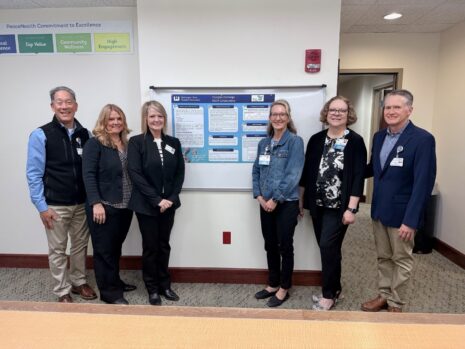
When PeaceHealth St. Joseph Medical Center joined the 2025 WSHA Complex Discharge DELTA cohort, the Care Management team stepped into the work with curiosity, humility and a desire to solve a long‑standing challenge. For Kelsey Johnson, Nurse Manager of Care Management, it was not only her first WSHA event; it was her opportunity to bring people together around a shared mission.
WSHA’s DELTA model emphasizes practical, iterative improvement. Rather than relying on assumptions or legacy processes, the model pushes teams to define the true problem, explore root causes, learn from data and frontline experience, test small, rapid-cycle changes and adapt accordingly. This structured yet flexible approach became the backbone of Johnson’s improvement initiative.
One of Johnson’s most significant contributions was assembling a truly interdisciplinary group; not just Care Management and Social Work, but also physicians, Respiratory Therapy and DME vendors. She understoo
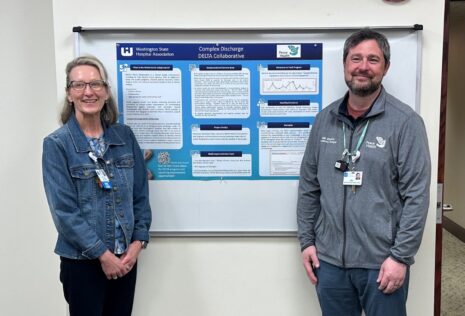
Kelsey Johnson, Nurse Manager, Care Management Will Zingrone, RT Manager
d the issue they were tackling couldn’t be solved in a silo.
Will Zingrone, PeaceHealth’s Respiratory Therapy Manager, partnered closely with Johnson throughout the project.
“Kelsey has a gift for bringing people together,” said Zingrone. “She doesn’t just ask for input. She builds solutions with the people doing the work.”
Through the DELTA’s structured improvement process, the team identified inconsistencies in documentation, ordering and communication that were causing discharge delays and confusion. Instead of patching the problem, they rebuilt the process from the ground up.
Together, they developed a new diagnosis pathway with clear, predictable steps and consistent documentation standards to reduce variation. They also created a new order panel to streamline provider workflow, engaged physician champions to reinforce the changes, and provided education to ensure the process was understood and adopted. This wasn’t a theoretical improvement; it was a practical, sustainable solution that frontline teams immediately felt.
“Once we aligned the documentation and the ordering process, everything clicked,” said Johnson. “People finally had a pathway they could trust.”
 Scalability is one of the most meaningful outcomes of this work. The new pathway is a model that can be shared beyond St. Joseph and replicated across other PeaceHealth hospitals. The clarity, consistency and interdisciplinary ownership built into the process make it adaptable and durable. The project demonstrated that WSHA’s DELTA model for improvement is not a one‑time event but a continuous cycle of learning and adapting.
For her first WSHA event, Johnson made an unmistakable mark. She listened deeply, collaborated widely and led with both structure and heart. Her work reflects the best of the DELTA model: not just solving a problem, but building a process that strengthens teams and improves care for every patient who comes through the doors. (Kimberly Parrish)